Umber: A Free Creative Font to Elevate Your Small Business Brand
Running a small business means wearing many hats, and often one of those hats is the chief creative officer. You are designing logos, creating social media graphics, printing product labels, and crafting emails for your customers. In this chaotic environment, finding the right typeface can feel like searching for a needle in a haystack. You need something that stands out but remains legible, something that feels unique yet professional. That is exactly where Umber comes in.
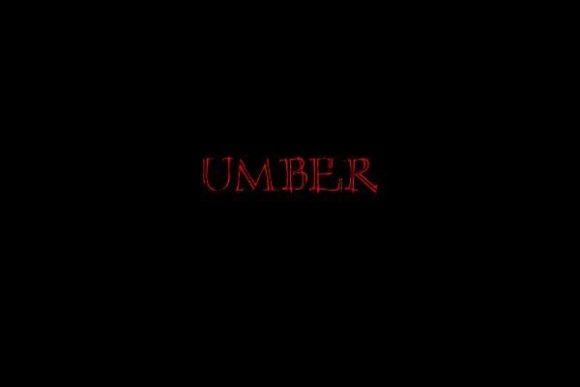
Created by Sally Dixon, Umber is a light-weight font with pointy edges and inclined characters. It is not just another decorative typeface; it is a tool designed to add confidence to your projects. Whether you are selling handmade candles, running a boutique, or offering coaching services, using Umber can help you look more consistent, recognizable, and trustworthy across all your real-world business touchpoints.
Why Umber Fits Your Brand Identity
The personality of a font matters more than you might think. When a customer sees your logo or reads your packaging, they form an instant impression. Umber brings a distinct mood to the table. Its light weight gives it an airy, modern feel, while the pointy edges add a touch of sophistication and edge. The inclined characters suggest movement and forward momentum, which is perfect for businesses that want to appear dynamic and progressive.
Unlike heavy, blocky fonts that can feel aggressive, Umber strikes a balance between playful and serious. This makes it incredibly versatile for various industries. Imagine a bakery owner using Umber for their shop sign; the lightness suggests delicate pastries, while the sharp edges promise quality ingredients. Or consider a beauty brand using it on product packaging; the inclination adds a sense of elegance that high-end cosmetics require. By choosing Umber, you are making a deliberate design choice that signals to your audience that you care about details.
Practical Applications Across Your Business Materials
One of the biggest challenges for entrepreneurs is maintaining visual consistency. If your website looks one way and your Instagram posts look completely different, customers may struggle to recognize your brand. Umber solves this by providing a strong visual anchor that works seamlessly across different mediums.
Logo Design and Branding
Because of its distinctive shape, Umber is excellent as a primary font for logo design. It captures attention immediately without needing excessive decoration. A startup founder could use it to create a memorable monogram or a bold wordmark that stands out in a crowded marketplace. The pointy edges give the logo a unique silhouette that is easier to remember than standard geometric shapes.
Packaging and Product Labels
For online sellers and handmade product creators, packaging is a critical marketing tool. Using Umber on product labels or boxes ensures your items look premium on the shelf or in a delivery box. Its readability holds up well even at smaller sizes, provided you pair it correctly. A candle maker could use it for the product name on a jar label, creating an immediate connection between the text and the artisanal nature of the goods.
Social Media and Digital Ads
In the fast-paced world of social media, your graphics need to stop the scroll. Umber works beautifully as a headline font for Instagram posts, Pinterest pins, and Facebook ads. The inclination draws the eye diagonally across the image, guiding the viewer toward your call-to-action button. When used in digital ads, it helps your message feel fresh and modern rather than stale or corporate.
Menus and Flyers
Café owners and service providers can leverage Umber for menus and promotional flyers. The font's clarity ensures that prices and descriptions remain easy to read, while its style adds character to the layout. Instead of a generic flyer, you get a piece of collateral that reflects your specific business vibe.
Readability and Real-World Performance
A common concern when adopting a stylized display font is whether it will be readable on mobile screens or printed materials. Umber handles this surprisingly well due to its open structure and light weight. However, success depends on how you use it. As a general rule, treat Umber as a headline or display typeface rather than body copy.
When designing for mobile devices, ensure your text size is large enough for the thin strokes to remain visible. On small product labels, avoid cramming too much text together. The best practice is to let Umber shine as the star of the show for titles, names, and key phrases, while leaving detailed information to a simpler supporting font.
Smart Font Pairing Strategies
To maximize the impact of Umber, you should pair it with a complementary typeface. The goal is to balance the decorative nature of Umber with a font that provides stability and readability. A classic strategy is to pair a decorative font like Umber with a clean sans serif font for body text. This combination creates a modern, professional look that is easy to scan.
Alternatively, if your brand leans towards a more traditional or elegant aesthetic, try pairing Umber with a readable serif font. The contrast between the sharp, inclined lines of Umber and the classic curves of a serif can create a sophisticated hierarchy in your designs. For instance, a boutique owner might use Umber for the store name and a simple serif for the "About Us" section on their website. This approach ensures that your brand identity remains cohesive without becoming visually overwhelming.
Testing Before You Commit
Before downloading Umber and applying it to your entire brand, take time to test it. Create mockups of your most important assets: your business card, your main website banner, and a sample product label. See how the font interacts with your existing colors and imagery. Does it feel too sharp? Too soft? Does it match the tone of your voice?
Testing also helps you determine the right font size and spacing. Sometimes a font that looks great on a computer screen needs adjustment when printed. By experimenting first, you avoid costly mistakes on physical materials like packaging or signage.
Licensing and Commercial Use
As a small business owner, understanding licensing is crucial. While Umber is listed under Freebies, this does not automatically mean it is free for all commercial uses. You must verify the specific license terms provided by the creator, Sally Dixon. Some free fonts allow unlimited commercial use, while others may restrict usage to personal projects only or require attribution.
If you plan to use Umber on products you sell, merchandise, client work, or digital downloads, you need to ensure you have the proper permissions. Ignoring these details can lead to legal issues down the line. Always check the documentation that comes with the download to confirm that you are clear to use it for your commercial font needs.
Adding Umber to your toolkit is a smart move for any entrepreneur looking to elevate their visual presence. It offers a blend of style and functionality that fits perfectly into the practical needs of a growing business. From enhancing your web design to making your packaging design pop, this creative font helps you build a brand that people trust and remember.